
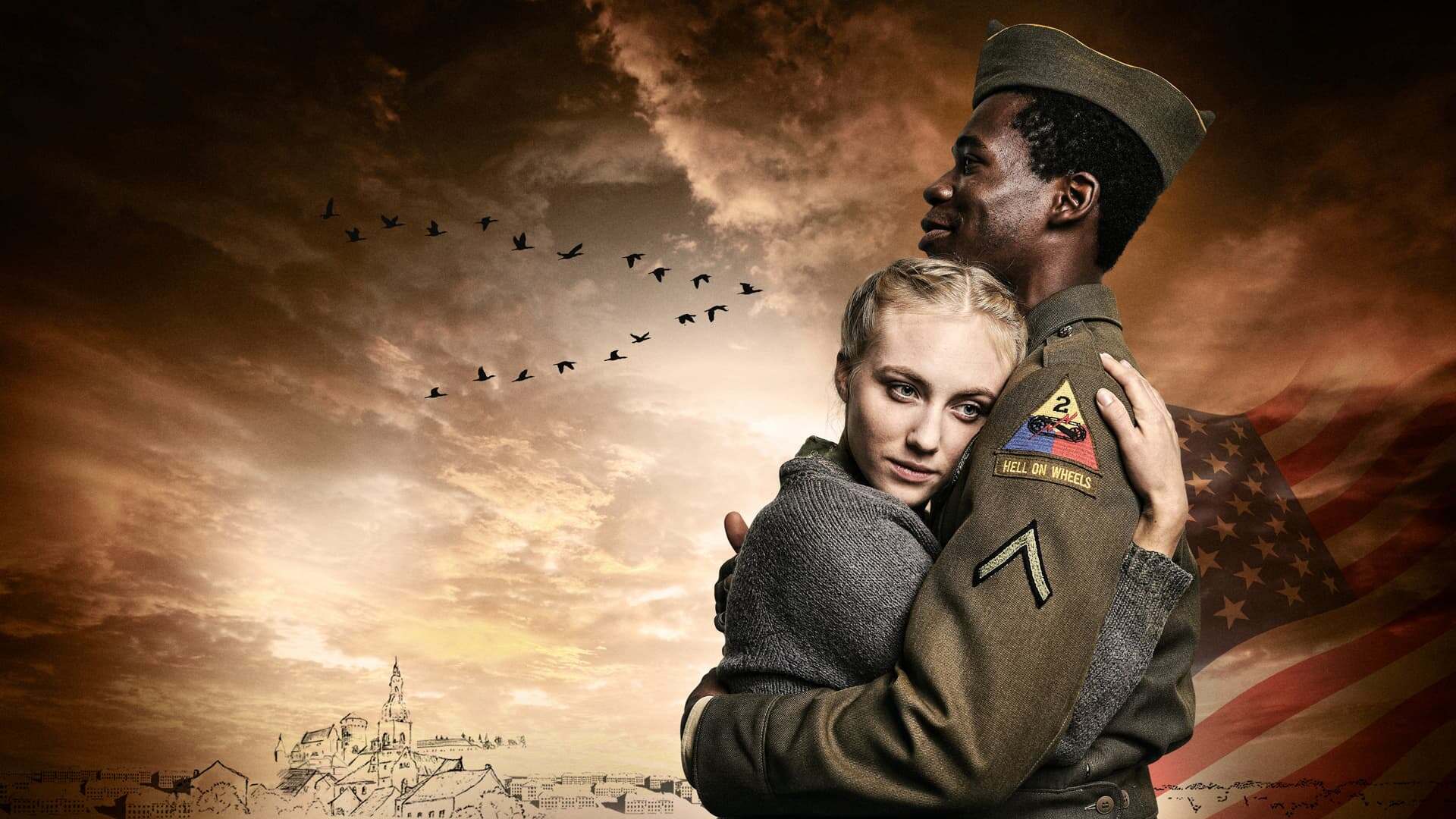
In 1950s West Germany, two friends confront a shifting world of American influence, testing their loyalties as tradition clashes with newfound freedom and desire.
The series opens with a card warning you that it contains racist language and other forms of discrimination, reflecting life at the beginning of the 1950s, and that some of it has not gone away. The card is an honest summary of what follows. A West German village a few years after the war is the setting, and the two worlds of the title are not simply Germany and America.
In a small West German town of the early 1950s, American influence brings new freedoms and unsettling change. Two young women find their lives reshaped as tradition collides with opportunity, challenging everything they've known.
Marie and Erika, raised in very different households, respond in contrasting ways to the shifting world around them. Their friendship becomes a lens through which the town's tensions, hopes, and generational divides come sharply into focus.
The Americans arrive as an occupying garrison and as a rumour of the future: dollars, a bar with a jukebox, films at the cinema. A soldier talks about a German painter who painted a blue horse, and is astonished that the local girl has never heard of him. A tank flattens a family's harvest, and the compensation claim becomes the whole family's business. A grandmother goes on giving the old salute because nobody has explained to her that the war is over. Marie falls in love with a Black American serviceman, and finds that her village has decided what that is allowed to mean, and so has the American army, and so has her own family.
The second world is the one nobody in the village will name. The house the family lives in was bought cheaply from a Jewish family who had been driven out, and a survivor is now placing advertisements in the newspapers, looking for what became of his relations and their property. Restitution claims like that were being made all over West Germany in exactly these years. They were met, here as elsewhere, by neighbours who had all been somewhere else at the time.
As political, social, and religious pressures intensify, both women confront choices that test their identities and loyalties. Their intertwined journeys reveal how personal dreams can clash with the expectations of a community in transition.
The series is exact about how power actually operated. A pregnancy outside marriage is dealt with in a back room and then rewritten as a tumour, with everyone agreeing never to mention it again. An accusation extracted from a frightened woman goes to an American court martial where the accused is Black and the possible sentence is death, and every character in the room understands what that means. The one escape route on offer is East Berlin, where the state says there is no racial segregation, and it is being sold by people with their own reasons for selling it. In German, directed by Dror Zahavi.