
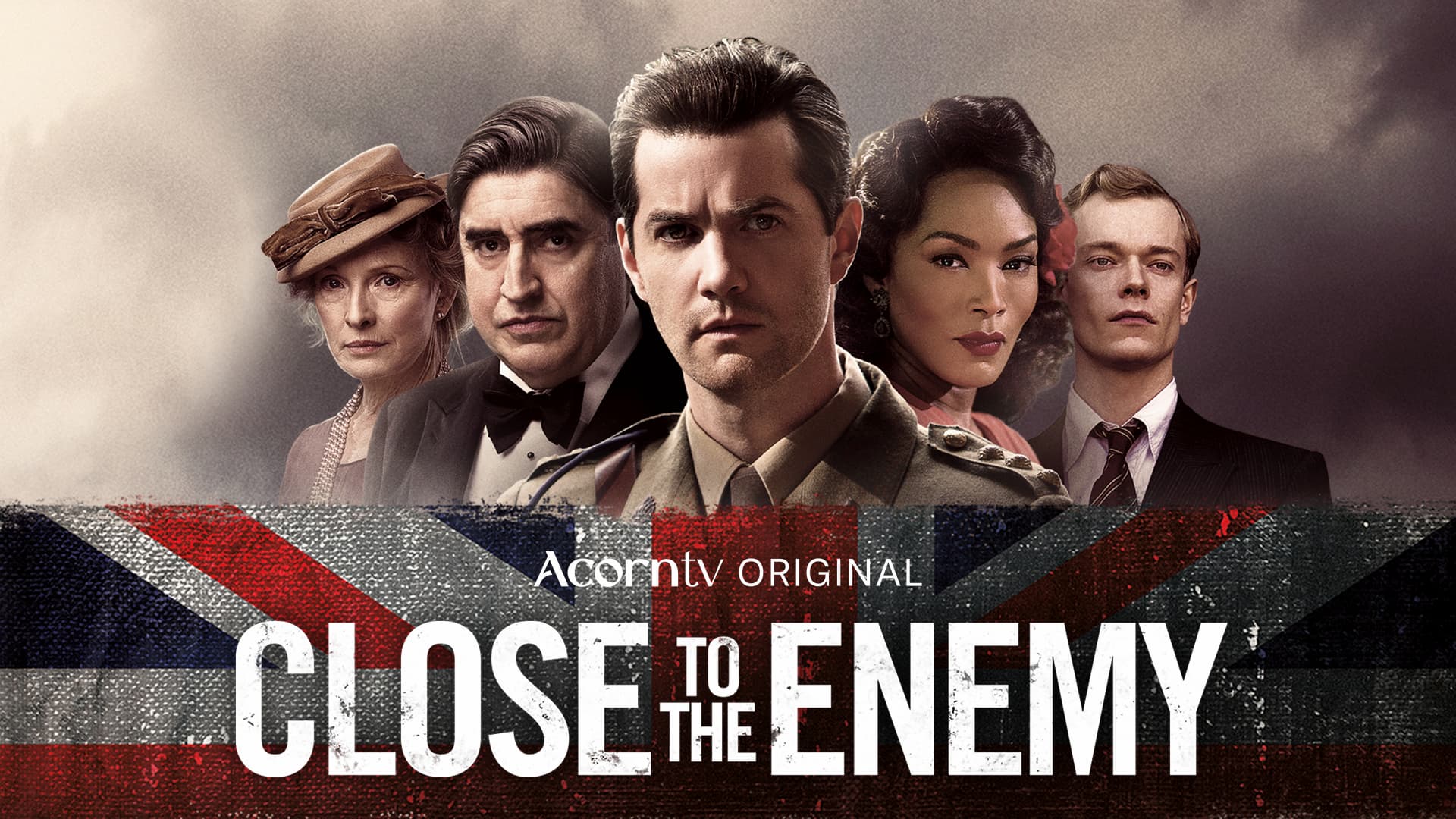
A British intelligence officer must win over a captured German scientist in post-war London.
Set in a bomb-damaged London hotel after the Second World War, Close to the Enemy follows intelligence officer Captain Callum Ferguson. His final Army assignment: persuade Dieter, a captured German scientist, to develop jet engine technology for the RAF.
With the Cold War emerging, such expertise is vital to Britain. Callum uses unorthodox methods to win Dieter over, and an unlikely relationship forms amid the suspicions and shifting loyalties of a world still reeling from conflict.
Around them, a cast of intertwined characters — Callum's brother Victor, former official Harold, American Anglophile Rachel, and war-crimes investigator Kathy — work to rebuild lives marked by a war that touched them all.
A public address system in an airport hall is the first thing on the soundtrack, telling passengers not to leave until their bags have been checked. Then a German man is being questioned about his own daughter, in a language he does not speak, by people who will not accept that he was given five minutes to pack.
"Not one of my questions has been answered. Not one."
Stephen Poliakoff's series is set in London in 1945, in the strange interval after the war has been won and before anyone has decided what winning means. Callum Ferguson, a British intelligence officer, is given a job that would have been unthinkable weeks earlier. He is to persuade a captured German scientist to work for Britain, rather than to punish him or put him on trial.
The scientist is Dieter Koehler, a jet engine specialist, and he arrives with a small daughter and no interest in being useful to anybody. Ferguson's task is to make him willing, and the series is unsentimental about what that requires. Early on, Ferguson brings the frightened man breakfast and points out how generous the rations are, then says he will explain where they are either way. The kindness in that scene is real enough, and it is also doing a job.
Poliakoff sets almost all of it in a bomb-damaged grand hotel, and the building does a great deal of the work. It is half ruin and half luxury. Displaced Europeans are living in it. So are war crimes investigators and jazz musicians, and so are the officials who are quietly deciding whose past will be examined and whose will not, and none of them has yet worked out which world they are in. The shooting has stopped; everything else about the war is still being negotiated.
The unease in the series comes from the fact that it is about a real policy. Britain and America both took German scientists and engineers, and the price of that expertise was not asking too many questions about what they had done. Nothing here is presented as a shocking secret. It is an ordinary administrative decision, made by tired people in a cold building, one file at a time.
The pace is slow, and deliberately so. Poliakoff cares more about the atmosphere of the moment than about plot mechanics: a country that has spent six years knowing exactly who the enemy was is suddenly required to be pragmatic about it. The people who find that hardest are the ones who saw what the enemy did.
Written and directed by Stephen Poliakoff. Seven episodes.