
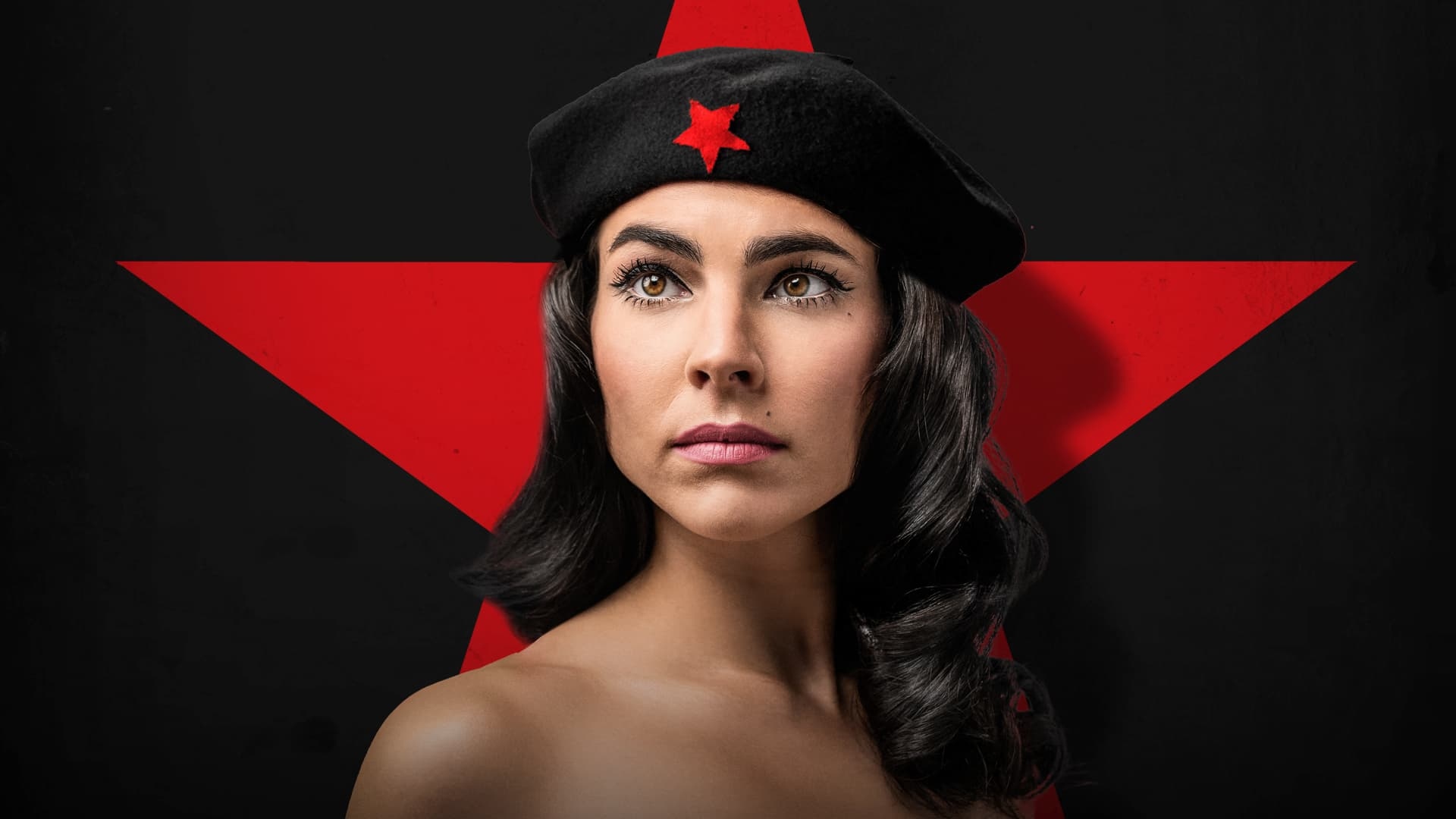
The troublesome fight of a very special woman in search of freedom and of her true identity.
This page opens with the synopsis supplied by the programme’s makers. Everything after it is our own.
The extraordinary biographical story of the life of Annie Silva Pais, the only daughter of the director of Portugal's political police, endowed with remarkable beauty and sensuality, but also possessor of an enormous spirit of rebellion.
In 1965, at the age of 30 while married to a Swiss diplomat and living in Havana, she abandons her husband and family to give herself to the Cuban revolution, all the while being secretly in love with Che Guevara.
Told in Portuguese across a single season, the series follows Annie Silva Pais between Lisbon and Havana, a life lived on both sides of a political divide that her own family was employed to enforce.
A beauty contest in Portugal, 1958. The compère works the crowd while the judges deliberate, the ten finalists are asked to wave once more, and the winner is announced: Miss Figueira da Foz Beach Swimming Pool, twenty-two years old, from Lisbon.
She is invited to say a few words, and does. "And I thought that in this kind of contest it wasn't necessary to know how to speak." Then, having made her point: "All I need now is to find a husband, learn how to cook and have a ranch of kids."
The line is delivered sweetly and lands like a slap. Cuba Libre follows her from that stage to Havana, and she covers a good deal more ground than the map accounts for.
The series moves between Salazar's Portugal and Castro's Cuba, and it is unusually clear-eyed about both. The Portugal she leaves is an authoritarian state with a nice climate, where a woman's future is a husband and a kitchen and everyone is very polite about it. The Cuba she arrives in is a revolution, and also a place where Brezhnev's plane is on the runway. Commanders ask why you are not watching the news. The phrase "of course" does a great deal of work in every conversation.
What holds it together is that she is looking for an identity rather than a politics. Neither regime has her as a partisan. She is trying to find out who she is in two countries that each hold firm opinions about what she should be, and the series treats that as a serious subject rather than a romantic one.
The production is Portuguese, and so is the language, and that vantage point is part of what makes it worth watching. The Cuban revolution has been filmed many times from American, Cuban and Soviet perspectives. Lisbon is a less familiar place to watch it from. Portugal had a dictatorship of its own, and censors of its own, and its own colonial wars were just beginning.
Directed and written by Henrique Oliveira. Set in 1965. In Portuguese with subtitles.