
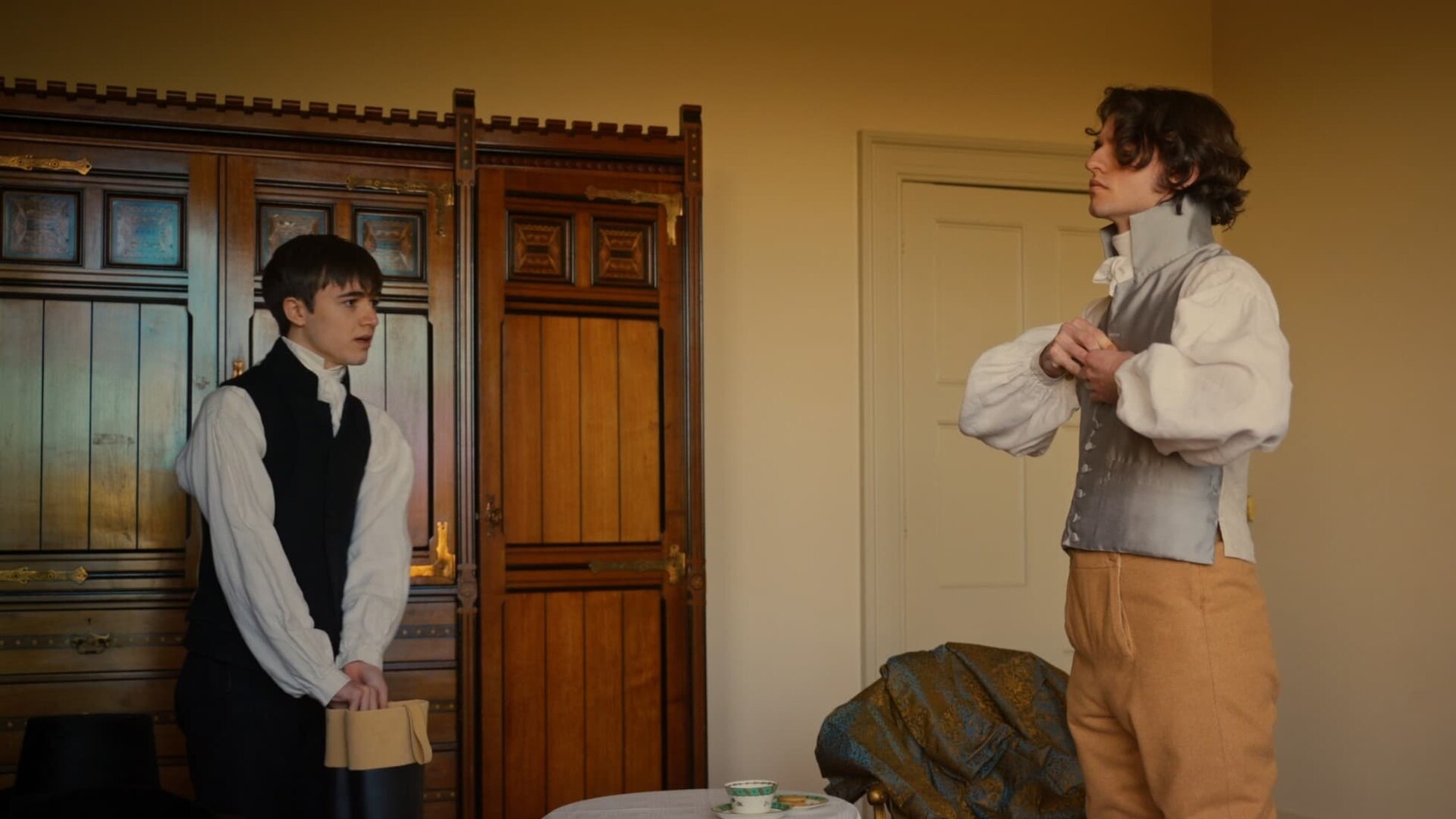
Fitzwilliam Darcy is dressed, layer by layer, in the fashion of the 1790s - and then goes to call on Elizabeth Bennet.
The wig died of taxation. Powdered hair had dominated the eighteenth century until a duty on hair powder was levied in the mid-1790s to help pay for the war with France, and fashionable men quietly stopped. By 1796, where this film is set, a gentleman like Darcy wears his own hair and shaves his own face. The film is built out of facts of that kind.
The sequence is a dressing, done close to real time, with narration. The banyan, the informal coat between a dressing gown and a housecoat, and one of the few remaining excuses for a fine coloured silk now that the fashion had turned to wool and natural colours. The nightshirt cut like a shirt but falling to the ankle. Stockings pulled above the knee and held by the breeches. Breeches cut down onto the calf so that they can tuck into the boot, with ribbon laces where the knee buckle used to be. The cravat, a square of muslin folded on the cross, starched, wrapped and knotted, which had just replaced the buckled stock. A waistcoat cut straight across at the waist with a tall standing collar. Top boots with the tops turned down to show a contrasting lining. A round hat with a tall tapering crown and a curving brim, in long-haired fur felt, brushed to a shine: the ancestor of the top hat.
The buttons are worth stopping on. Darcy's coat carries death's-head buttons, made by weaving silk thread over a wooden base, and most of the buttonholes on a riding coat of this cut are purely decorative. Fashion fastens the coat; function has very little to do with it.
Then the second half turns into Austen. Bingley wants time alone with Jane and cannot have it, so a country walk is arranged for four; the Bennet household is thrown into a scramble by the arrival of a gentleman Mrs Bennet has just finished saying she cannot abide; and on the walk, Elizabeth thanks Darcy for what he did for Lydia, and Darcy asks whether her feelings remain unaltered. The film puts the most famous exchange in English romantic fiction directly after twenty minutes about linen.
Filmed on location at Epworth Old Rectory in North Lincolnshire, and directed by Nicole Loven. A thirteen-minute drama set in 1796.
Crow's Eye Productions more or less invented this small genre, the getting-dressed film, which treats historical clothing as a process rather than a costume. Watching it makes the case for why the process matters. Nobody in a period drama moves the way you move when you have been laced into something by another person.