
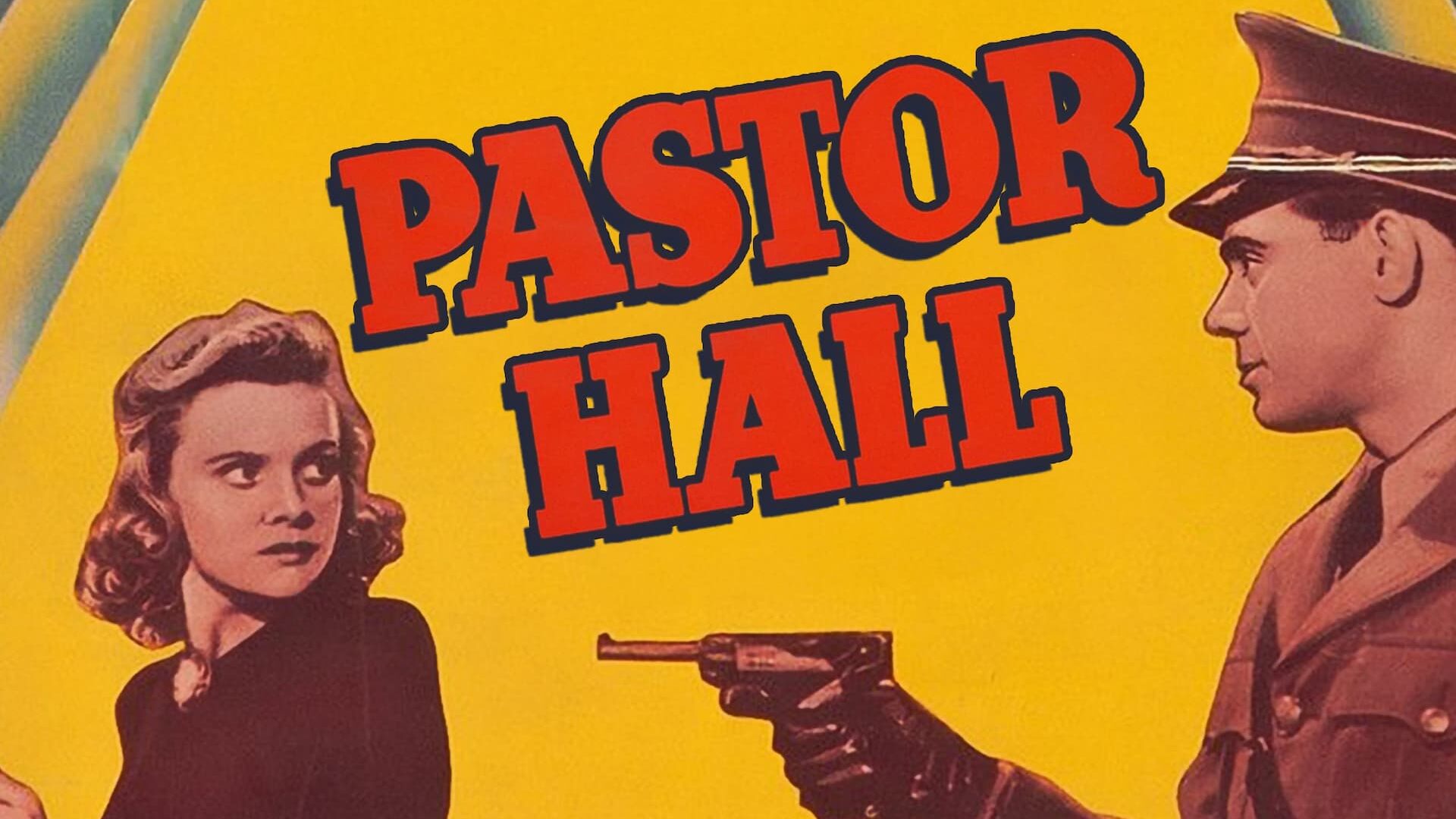
A compassionate village pastor resists Nazi oppression, standing firm in his beliefs as his community confronts fear, indoctrination, and the harsh demands of the new regime.
Set in the German village of Altdorf, the film follows Pastor Hall as he witnesses Stormtroopers imposing Hitler's 'New Order' on previously peaceful daily life.
Hall's moral clarity and refusal to compromise place him at odds with both the authorities and villagers who choose compliance, silence, or self-preservation.
Inspired by the real experiences of Martin Niemöller, the story highlights one man's steadfast humanity amid escalating intimidation, political pressure, and the erosion of communal trust.
The film opens on an ordinary morning in the village of Altdorf. Friedrich Hall greets his parishioners by name, Christine and Hazel and Sam, and admires the flowers Lena has arranged in the church. Then Heinrich, a young man the pastor has helped through hard years, comes to say goodbye. He is leaving to join the stormtroopers.
"A stormtrooper goes where he's told," he says.
"Oh, you're a stormtrooper now, are you?"
"Well, it's a job, Herr Pastor. I've been out of work so long."
That exchange happens ninety seconds into the film, and the whole argument is in it. Nobody in Altdorf sets out to do evil. A decent young man takes a uniform because it comes with wages, and thanks the pastor for everything he has done for him on the way out of the door. Tyranny arrives in Altdorf as an employer, which is not how anybody expects it.
What follows is the slow discovery of what that uniform costs. The New Order comes to the village in stages, and each stage is small enough to be accommodated. Neighbours choose compliance, or silence, or simply the quiet decision not to notice. Hall does not fight anybody, which is not what films usually mean by refusal. He declines to stop saying what he has always said, and that alone turns out to be intolerable to the people now in charge.
The film was written out of direct knowledge. Its source is a play by Ernst Toller, a German writer imprisoned after the First World War and driven into exile by the Nazis, who did not live to see it filmed. Hall himself is drawn from Martin Niemöller, the pastor who spoke against the regime and was sent to a concentration camp for it. Niemöller wrote the lines about their coming first for the socialists, then the trade unionists, then the Jews, which are still quoted by people who have no idea who wrote them.
The ending is a sermon delivered while the boots are audible outside. Hall tells his congregation that those who die for the truth "die as soldiers on the battlefield of the spirit", and then, knowing exactly what is coming through the door: "I shall be with you when you stand up and fight against that which you know to be wrong."
It was made in 1940, and that date changes how you watch it. Nobody involved was looking back at fascism from safety. They made it while the outcome was entirely unknown, trying to tell an audience something it urgently needed to understand about what was happening a few hundred miles away, and doing it through a village and a job and a young man who only wanted to work again.
Directed by Roy Boulting, from the play by Ernst Toller, with a screenplay by Leslie Arliss and Anna Gmeyner. Ninety-six minutes.