
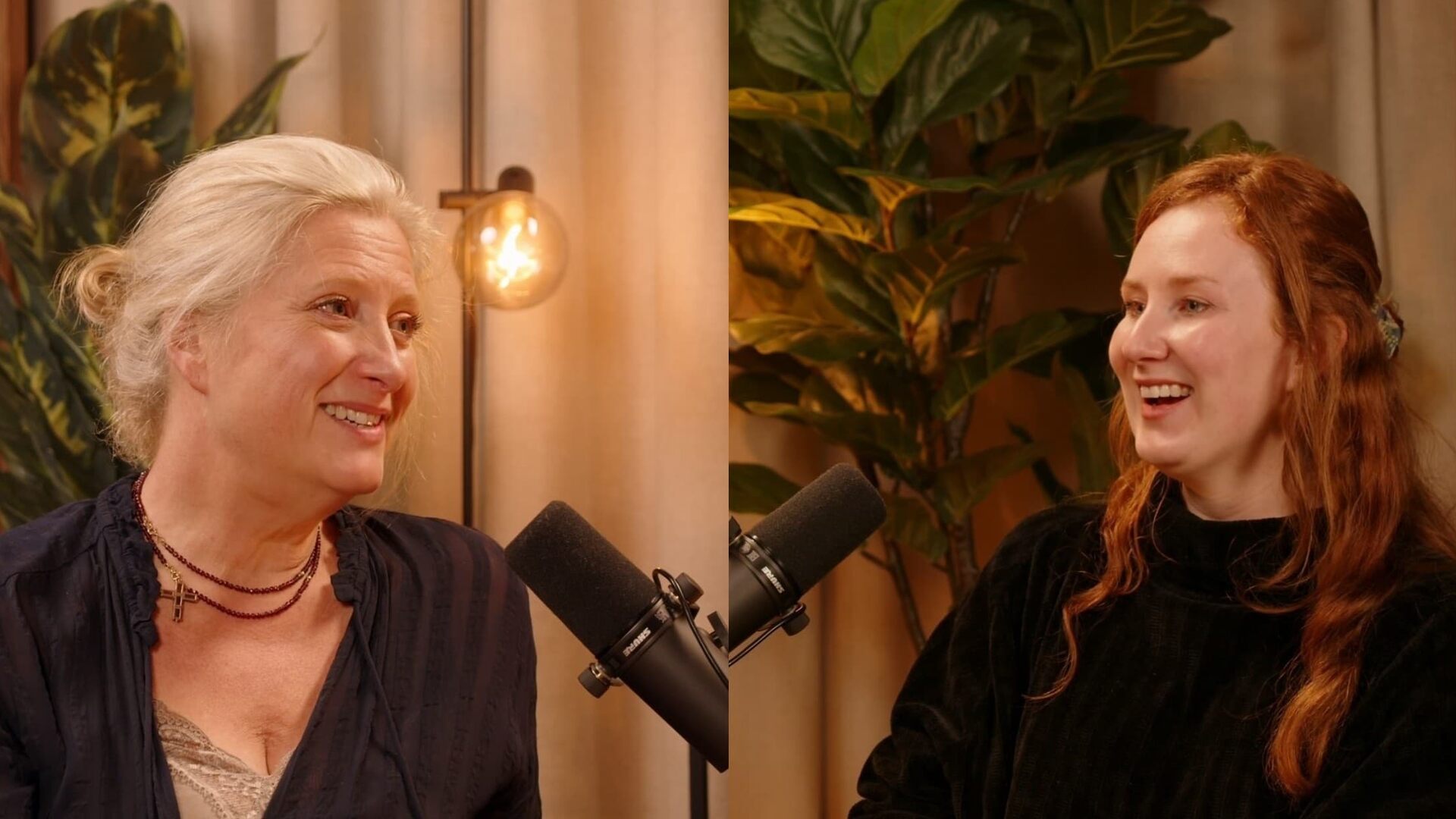
Yoreflix Founder Imogen has a conversation with Susannah Harker, known for playing Jane Bennet in the 1995 BBC series of Pride and Prejudice.
Susannah Harker played Jane Bennet in the 1995 BBC Pride and Prejudice — the adaptation that pulled Austen out of the drawing room — and Mattie Storin in House of Cards, both adapted by Andrew Davies. She filmed the first while pregnant, on a six-month shoot, with her hair basket-woven into a Grecian braid that meant she could not lie down. Yoreflix founder Imogen Cooper talks to her about knowing when a script is good, being greeted as Jane Bennet thirty years on, and the comedy drama she is writing about what happens to an actress after fifty.
Knowing you are on a hit
Imogen Cooper: Did you know it was going to be such a popular series — that it would end up such a prominent, iconic piece of period drama?
Susannah Harker: No, of course not. We didn't realise it would have the reach and the power and the legacy it still has.
But when you're working on what becomes a hit show, there is something different about the atmosphere. We all knew the script was as powerful as it was. The casting was good, the director was good, and there is a feeling of being in sync when those things come together. I've only done two hits in my life, and the other was House of Cards, which also still has a legacy — and again it was Andrew Davies who adapted it. I remember reading both of those scripts and having a sense of their potency. So to a degree I wasn't overly surprised. But the reach of it, across all ages and classes — I couldn't have predicted that.
IC: People disagree about whether it's the script, the director or the cast that makes something shine off the page.
SH: For most actors the go-to is the script. When you first open one that has power and potency and tells a good story — which is what it all comes down to in the end — that's where it's at. And that usually comes with a package: a brilliant director will also read that script and respond to it. It's a knock-on effect. All the elements fall into place if the script is good.
Six months, and the Pride and Prejudice baby
IC: You've told me before about the rehearsal time those BBC series used to have. I don't think filmmaking happens that way now.
SH: That's absolutely true. It took its time. We were one of the last major period productions to do that — to have the luxury of an incredible rehearsal period at Acton Studios. It would be considered a great luxury now, and we rather took it for granted. On set these days you work through lunches, everyone is expected to, and the speed of it. Ours was quite paced.
I was pregnant at the time, so I was grateful for that.
IC: Through most of the filming?
SH: Filming was six months, and I was four months gone by the end — so the first trimester was in there. It was a bit hairy, because I wasn't feeling my best. A little bit peaky, playing Jane Bennet, who is meant to be this graceful person, beautiful inside and out. But I suppose all those hormones may have helped with the serenity.
My son is the Pride and Prejudice baby. One of them — Mel on the crew was also pregnant, so there's another one out there somewhere.
IC: What was the early start?
SH: Five o'clock. They'd opted for a wig for Jennifer Ehle, because she was in so much of it, so they plonked a dark wig on her head. But I had my own hair, which was very long, braided and basket- woven into a Grecian look, because that was the effect they wanted for Jane. It meant I was up before everybody else — and that I couldn't lie down, because it was all woven into place.
IC: I have friends who were in Vikings and had to be up at three for the Nordic styles.
SH: I have every sympathy, from the basket-weave. That's one of my abiding memories, really: the hair.
IC: My favourite place on a set — and I'm not an actor, so I have no business being there — is the hair and makeup chair.
SH: It's the refuge. Every good film set has one. Everyone knows it's where you go to unwind and debrief, and those teams are so important in every actor's life.
A gorgeous, endless English summer
IC: Is there a feeling you still carry from filming it?
SH: It was one of those dreamy English summers — endless and hazy and rosy and bucolic and faintly ridiculous. All the shires were involved. It was so English.
I remember endless ballroom scenes, and not always wanting to do them. But the aesthetic thrill of it, the costumes, the fittings with John Bright, that incredible designer — all that detail I remember being thrilled and fascinated by.
And the laughs. There were a lot of girls on it, so it was like going back to the convent, I always say — the sisters, the siblings. We laughed a lot. It was a very good energy.
The lake
IC: Did anyone realise Colin Firth getting out of that lake was going to be such a thing?
SH: No one ever mentions that scene. Of course they do — that's all they do.
I hadn't read the book when I read the script, so I remember thinking, God, this is very saucy Jane Austen. This is very hot. But that's exactly what it was meant to be. The whole point of Andrew Davies's adaptation is breaking out through the drawing room doors — most of the Austens had been quite stuffy and behind those doors until then. Not that they weren't good; my mother was in one, 1976 I think, playing Jane Bennet in a BBC adaptation.
IC: I didn't know that.
SH: The lake scene, and the whole business of nature coming in and erupting, is all about the undercurrents. The powerful, simmering, smouldering undercurrents.
IC: That's why those scenes stay with people. It's not just Colin Firth getting out of a lake — excellent as that is in its own right — it's the metaphor that's already in the writing.
Carrying a character for thirty years
IC: Some actors love that an iconic character stays with them; some really dislike being defined by one. What's your experience?
SH: I'm incredibly proud of it. It's only brought good things, and I've enjoyed carrying her around with me. It can be a little strange when it's thirty years later and people are still saying, you're Jane Bennet — no, I have moved on, I've had a life since. But my God, what a wonderful thing to have done and to be associated with.
The thing is that Austen is like Shakespeare. That's the testament to the quality of the writing: every generation brings its own version, and it changes, it gets pulled into a different shape. Whoever is playing Jane now, it will resonate with the generation coming. The writing is good enough to take that.
Jane Bennet's Second Spring
IC: We met around the 250th anniversary, and you're working on a project.
SH: It's called Jane Bennet's Second Spring. We've said it now.
It's a female midlife coming-of-age story — a comedy drama, and I think we have to say that. It's based on some of my own personal experiences, so it's meta, though some of it very much isn't. It's surreal: there's a very surreal story running alongside a very real one.
It's about the menopause, which people groan at — oh no, another one.
IC: No groaning allowed.
SH: It's about female midlife visibility, really. Having been very visible in a particular role at a particular time in my life, and using that as a metaphor for midlife as an actor: how that wanes with age, and the kind of roles you're suddenly offered by the time you turn fifty. We become matrons. I'm offered matrons and dowagers and Mrs Thatcher. Meanwhile my male contemporaries are all swinging swords around their heads and wearing sheepskin and leather, and we're in pearls and sensible shoes, and it's all over.
And you think: well, what happened? That isn't quite reflecting who we are now. We're all living much longer, and we're still present and relevant. So I'm writing to that — which sounds po-faced and lecturing, but it isn't. I hope we've done it lightly. And it's funny.
IC: It matters, because characters immortalised through literature and then film stay the age they are through every adaptation, while the audience and the actors age. So there's a generation who watched and bought into those characters and no longer see themselves reflected in them.
SH: I hope it's observing how we develop and mature, and how we navigate that without a road map — how frightening it is, particularly for women coming into late midlife. And how she finds her way through that tricky period.
IC: Is there horror in it? I should say my horror threshold is extremely low. I got scared by the barracuda in Finding Nemo and ran out of Lilo & Stitch at the cinema.
SH: It isn't horror. But there's a darkness lingering in the corners. A tinge of something, I hope. In the shadows.
The dances
IC: I did ballroom and Latin when I was younger, and mostly pranced around the house pretending I was at a Regency ball. Would you learn those dances again?
SH: At the drop of a hat. I love dancing anyway.
IC: Was it freeing, or too structured?
SH: They're not free dances — you have to get later than that to be free. But there's tremendous containment and energy in them. Again, it's Andrew Davies bringing out what's under the surface: those dances have the same passion and romance and heat underneath a reserve, a coolness, a distance, a discipline. That's probably at the core of why we go back to these period dramas.
IC: Now, if we want to say we like someone, we just tell them.
SH: You don't have to do a big dance for hours. Maybe we should dance about those things more.
Which period, and one piece of advice
IC: If someone offered you a drama set in any period, where would you go?
SH: Many, honestly — that's one of the things I love about being an actor or a writer, that you can go back into different times. I'd be a bit nervous about medieval. The Georgians were all right. They were actually having a bit of a laugh, and they didn't take themselves too seriously. Not too corseted either — a soft corset. Comfort over everything, that's what I'm thinking of these days.
A better spirit about life, really. It hadn't become as serious as the Victorians covering up the chair legs. It was flamboyant and free, which people don't realise about the Georgians. Lots of lovely balls, and punch.
IC: Sign me up for the balls and punch. Finally — advice for people coming into the industry now, when it's a tough environment?
SH: Diversify. We all have to. I've got a son in the arts, and I've been back to my old drama school, Central, and seen young people coming into the profession, and it isn't the same. All of us, whatever age, have to think about what else we can do.
Luckily I seem to be able to write, and that's given me a huge lease of life and the ability to stay connected to the art I love. Without it, it would be really tough. So look at your other skills — something around what you love — and plunder what you've got. Go out and explore.
The exciting thing for young people now is that they're far more open to that. You don't have to stay in your own lane. There's a way you can make a film these days that wouldn't have been possible ten or twenty years ago.
This interview has been edited for length and clarity.