
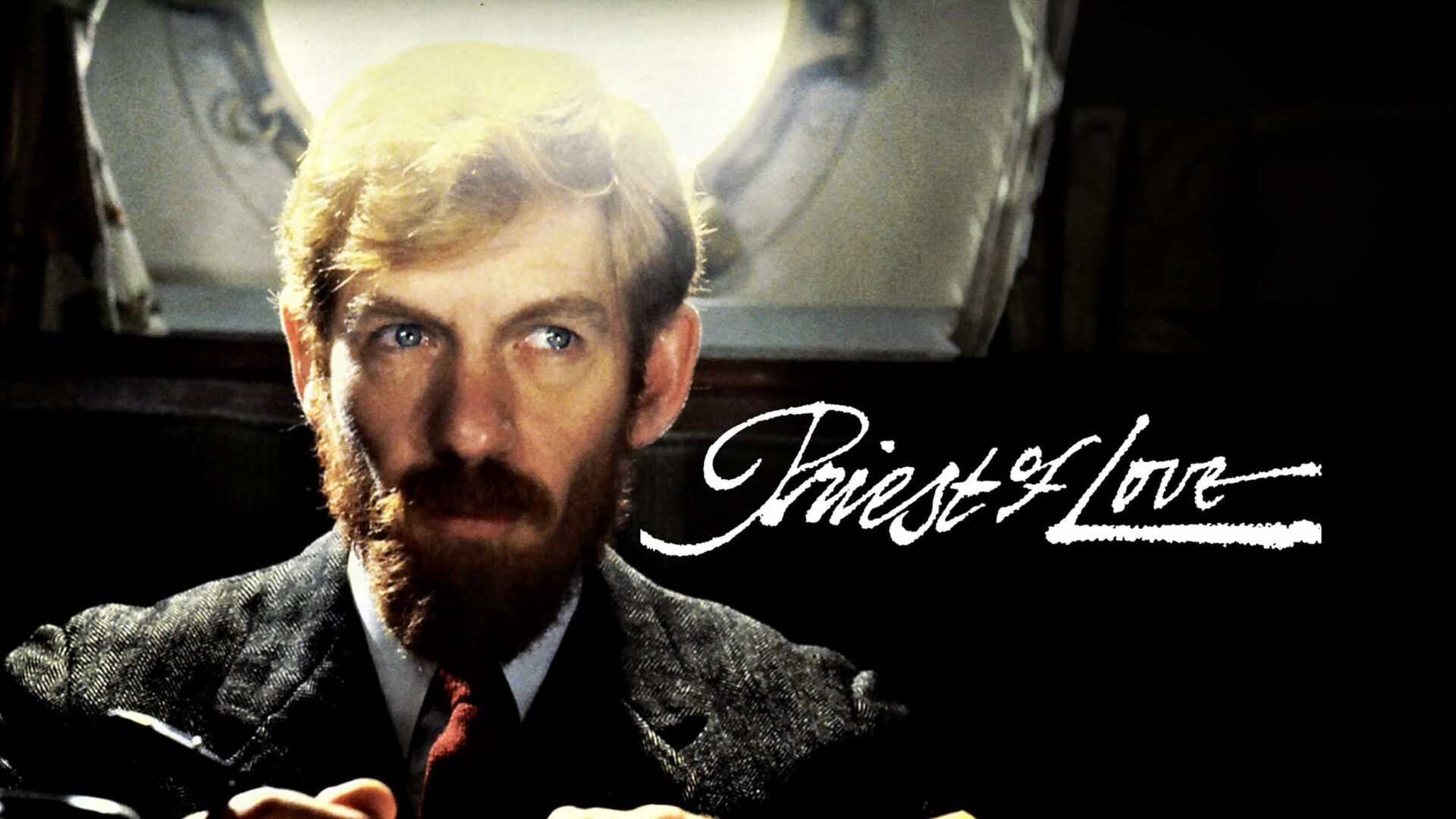
A richly atmospheric portrait of D.H. Lawrence's later years, exploring his artistic fire, turbulent relationships, and search for creative and personal freedom.
In 1915 the police seized the unsold copies of The Rainbow and a magistrate ordered them destroyed. Its author was thirty years old and tubercular, married to a German, and now unpublishable at home. Everything in this film follows from that. D H Lawrence spent the next fifteen years moving about and writing and being watched, almost entirely outside the country he could not stop writing about.
Priest of Love follows D.H. Lawrence in his later years, capturing his artistic intensity and the emotional complexities surrounding his marriage, friendships, and creative ambitions.
Following the banning and burning of his novel, 'The Rainbow', D.H. Lawrence and his wife, Frieda, travel to various locations throughout the world - returning for a short while to England where Lawrence writes 'Lady Chatterley`s Lover'.
The suspicion follows them about, and the film is good on how petty it is. Frieda was born a von Richthofen and a cousin of the flying ace, which is enough for a stranger to inspect their picnic bag on the assumption that it holds a camera. The wartime expulsion from Cornwall on suspicion of signalling to submarines is the same joke with the state behind it. Wherever they land the same thing happens. A coterie assembles around him. It calls him Lorenzo and quarrels with Frieda, and later it gets written about.
The New Mexico passage is the strongest. A rich patron gives them a ranch and is given the manuscript of Sons and Lovers in exchange, and then hands that manuscript to her psychiatrist to settle a bill. Lawrence answers with a mocking little routine about the great American money trick, and it is the film's clearest sight of him: a collier's son who has spent his life among people whose money means they never have to finish a thought.
The film immerses viewers in Lawrence's international wanderings, portraying the cultural landscapes that shaped his writing and the challenges he faced as a fiercely independent literary voice.
Ian McKellen's performance highlights Lawrence's uncompromising spirit, revealing a man driven by passion, conviction, and a relentless desire to express truth through his art.
There is a scene at the colliery where his father worked, on a track worn smooth by pit boots, with a rant about the general strike running under it. Why don't they fight, why don't they make a revolution. It tells you how far he had travelled and how little he had left the place. He died of tuberculosis in the south of France at forty-four. An hour and thirty-eight minutes, directed by Christopher Miles.