
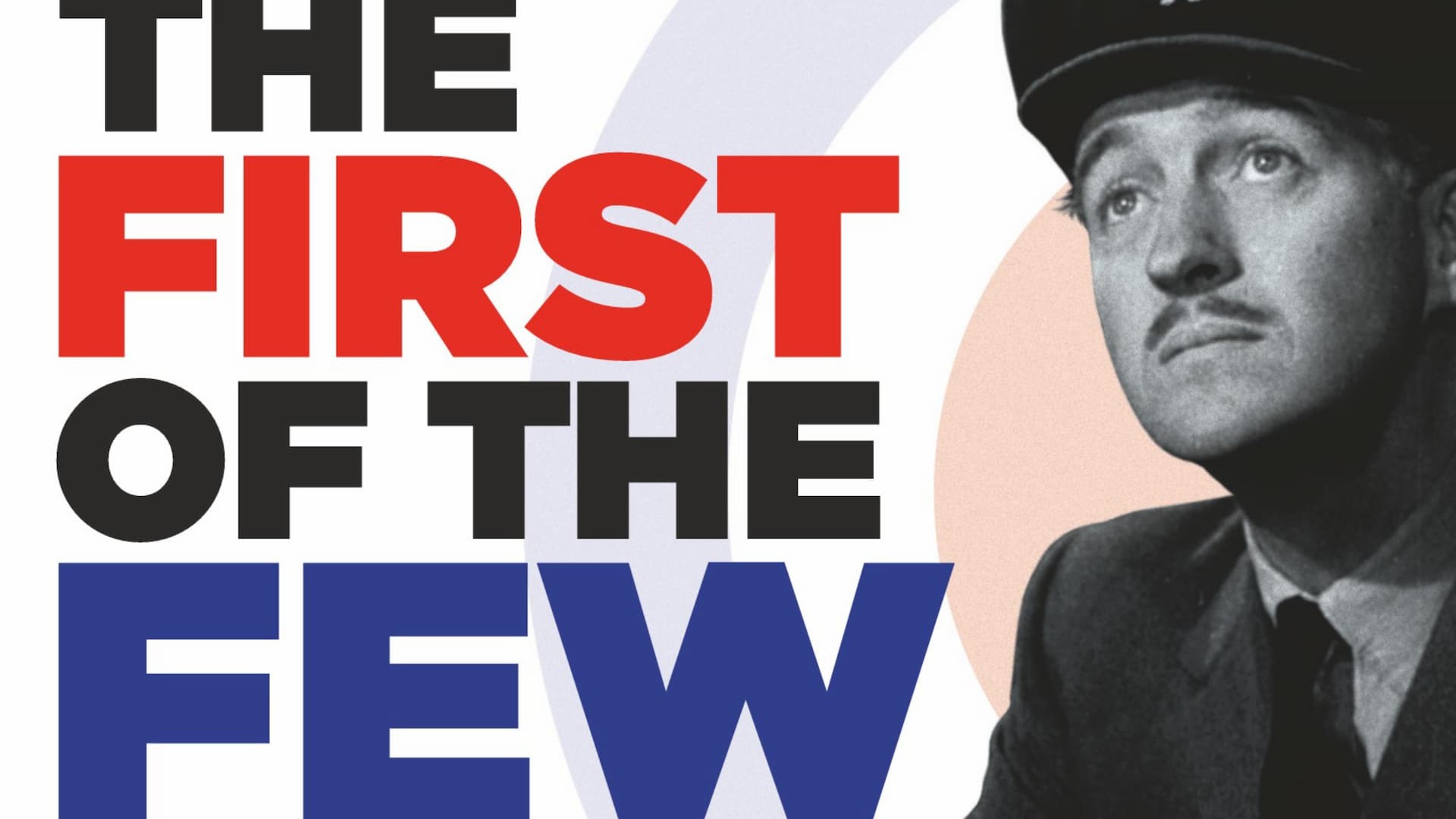
R.J. Mitchell battles time, illness, and global tensions to create a revolutionary fighter aircraft, shaping Britain's future as war clouds gather over Europe.
The film was made in 1942, while Spitfires were flying operationally and the outcome of the war was unknown. Everything about the way it is told follows from that. It opens with a newsreel voice listing the countries that have already fallen and asking whether Britain can survive the summer, and then goes back fifteen years to a drawing office, to explain where the aeroplane in the sky above the cinema came from.
The film follows aviation designer R.J. Mitchell as he pushes engineering boundaries, driven by a growing awareness of Europe's shifting political landscape and Germany's accelerating militarisation.
The first half is a racing picture, and the racing was real. The Schneider Trophy was the great international speed contest of the age, flown by seaplanes off the water, and Britain's entries came out of the same small company and the same designer's head. Win it three times in a row and the trophy is yours for keeps. In the film's version of that campaign an engine is rebuilt in seven hours at the trackside, an aristocratic patron turns up on a yacht flying a banner that insults the government, and the designer uses each victory to argue for the machine he actually wants to build.
Supported by test pilot Geoffrey Crisp, Mitchell refines his aircraft designs through relentless experimentation, international competition, and an urgent belief that Britain will soon need superior air power.
The turn comes on a visit to Germany, at a gliding club, in a conversation with a charming young man about how well the new government organises its youth. Mitchell leaves the next morning. Back home he starts describing the specification nobody has asked for: four hundred miles an hour, a climb to ten thousand feet in minutes, a dive at five hundred without losing the wings, eight machine guns.
Leslie Howard's portrayal highlights Mitchell's determination and creative brilliance, revealing the personal sacrifices behind a machine destined to play a crucial role in Britain's defence.
Howard directed the film as well as starring in it, with David Niven as the test pilot, and both halves of the story are shadowed by deaths the audience of 1942 knew about. R J Mitchell did not live to see the Battle of Britain; he died of cancer in 1937, at forty-two, having driven himself through the design while ill. Howard himself was killed the year after this film was released, when the airliner bringing him home from Lisbon was shot down over the Bay of Biscay. An hour and fifty-eight minutes, and released in America under the title Spitfire.