
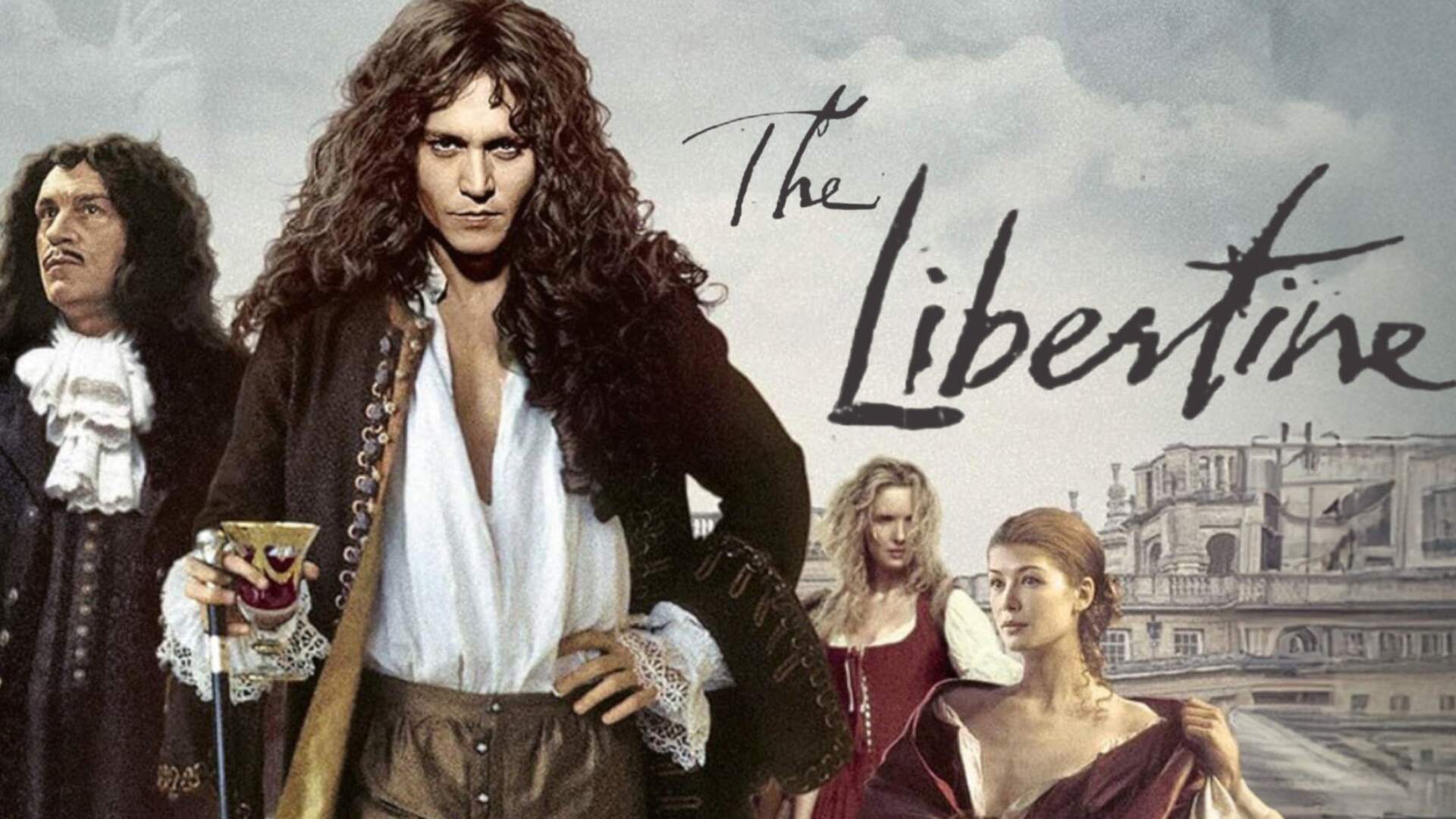
A brilliant yet self-destructive 17th-century poet navigates fame, excess, and artistic ambition, leaving a legacy far larger than his turbulent life.
Note: This film contains adult-rated content.
It opens by telling you not to like him. John Wilmot, second Earl of Rochester, walks up to the camera and announces that the gentlemen will be envious and the ladies repelled, that he is up for it all the time, and that you will like him a good deal less as we go on. Few films hand you a warning label that accurate before the first scene.
The Libertine paints a vivid portrait of John Wilmot's turbulent world, blending Restoration excess with artistic ambition. The film captures the era's intoxicating mix of theatre, politics, and unrestrained personal expression.
Johnny Depp's performance emphasizes Wilmot's sharp intellect and volatile charm, placing him within a court culture where wit, provocation, and shifting loyalties shape every relationship and creative opportunity he encounters.
The relationship that actually organises the film is a rehearsal rather than a seduction. Rochester watches an unfashionable young actress get booed off, tells her that she played her one truthful moment and then spent the rest of the scene imitating her betters, and starts coaching her. Women had only been allowed on the English public stage since 1660, and the received wisdom was that an actress should copy her seniors. The film's Elizabeth Barry works a single speech twenty times in an afternoon while the company watches in bafflement. She went on to become the outstanding actress of the Restoration theatre, having been taught by a man who could never do the same thing for himself.
Around them is the political comedy of a favourite who will not be useful. Charles II, who is uncle by favour and jailer and rescuer by turns, keeps pointing out that anyone can be against things. A seat in the Lords is waiting. A man of Rochester's gifts could sway events if he could be bothered. Rochester's reply is a satire on the King, staged at court, which is his idea of an argument. The playwrights of the age wander in and out, writing him into their comedies and being told they have made him too endearing to be true.
Through intimate character moments and atmospheric settings, the film explores Wilmot's struggle between brilliance and self-destruction, revealing how his passions, flaws, and defiance contribute to a legacy that outlives his chaotic, shortened life.
Rochester was dead at thirty-three. An hour and fifty-four minutes, directed by Laurence Dunmore from Stephen Jeffreys's play. The play's habit of speaking directly to the audience survives the adaptation, which is why the film feels less like a costume drama than like being cornered by one.