
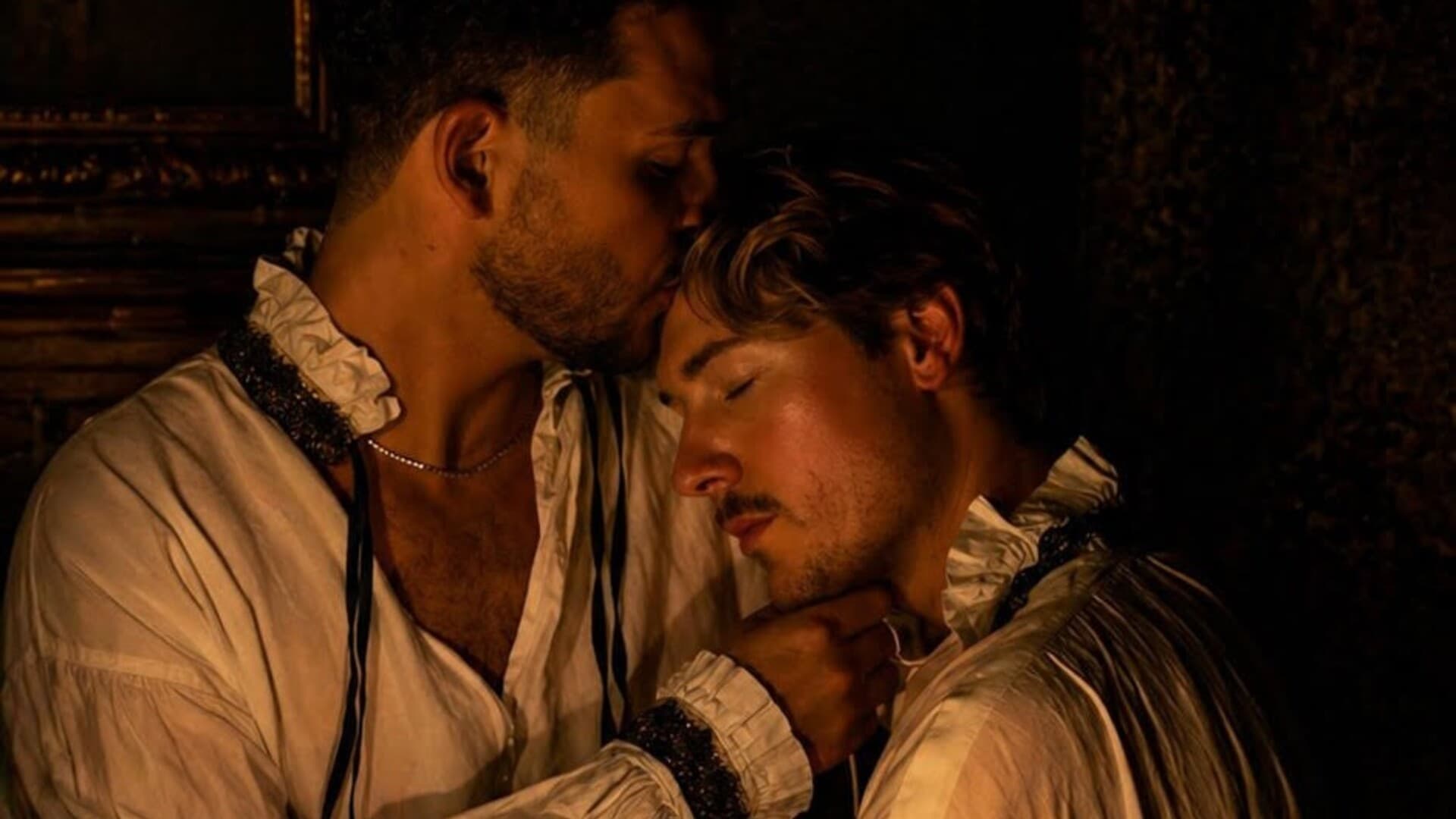
An ageing Shakespeare recites Sonnet 18, recalling an untold love between two Elizabethan men — a tender take on literature's most celebrated poem.
Shall I compare thee to a summer's day is the most quoted love poem in English and one of the least read. It sits at number eighteen in a sequence of a hundred and twenty-six sonnets that Shakespeare addressed, on the plain evidence of the poems themselves, to a young man, the fair youth of the title. Wedding readings tend to leave that part out. This film is about nothing else.
An intimate vertical short inspired by Shakespeare's Sonnet 18. Framed by an older narrator's reflection, the film imagines the enduring love between two Elizabethan men, bringing a queer perspective to one of literature's most celebrated sonnets and playwrights.
The framing is a single idea, delivered in about twenty seconds by an older man before a word of the poem is spoken. There are parts of a life you may share freely: triumphs, work, respectable turns of fate. There are also the quieter passages that stay in the margins. Then the sonnet arrives, and the promise it makes about outlasting death is being made to somebody the record was never going to name.
'The Fair Youth: Sonnet 18' imagines two Elizabethan men in love, not to rewrite history but to illuminate the lives and relationships that often go unseen within it. The film asks the audience to consider that queer love has always existed, even if it has not always been preserved in the historical record.
At just under two minutes, the hope was to create a brief but emotionally resonant interpretation of one of Shakespeare's most celebrated sonnets - one that honours the original text while inviting audiences to see it through a fresh lens.
The vertical framing is deliberate. The frame holds one face at a time and nothing else, so the poem arrives at the distance a phone is held rather than the distance a stage sets. Written and directed by Florian Hencher. At under two minutes it is the shortest drama in this catalogue, and the easiest to watch twice.