
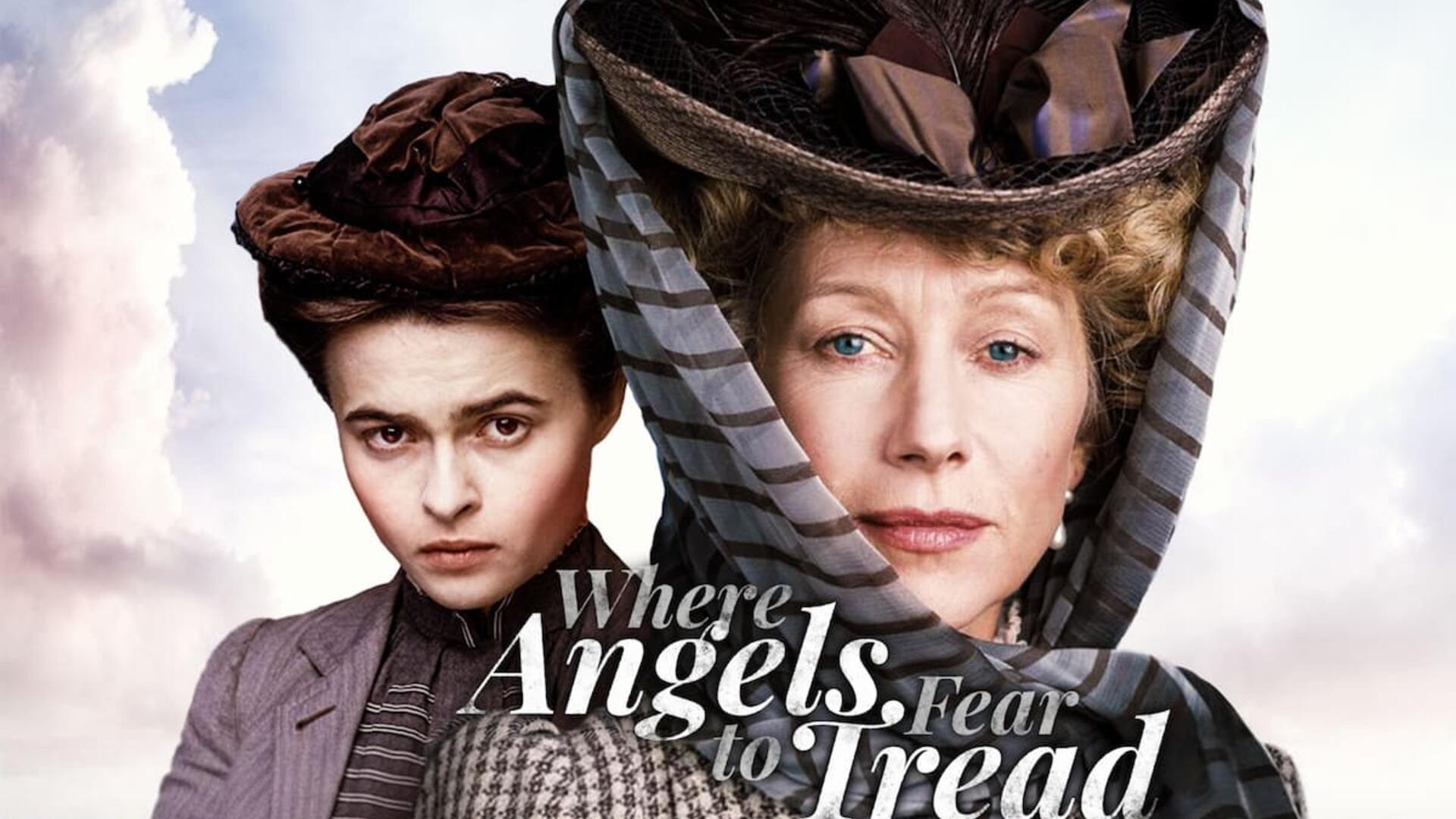
A widow's impulsive romance in Tuscany sparks a clash of cultures, pride, and hidden motives, drawing everyone into a journey that transforms their loyalties and desires.
A young widow, Lilia Herriton, travels to Tuscany with her friend Caroline Abbott and unexpectedly falls in love with a much younger Italian man.
Her late husband's family, obsessed with propriety, try to intervene, but Lilia chooses to stay in Italy and start a new life. After unforseen circumstances, the Herriton family becomes determined to take control of her infant child, claiming it as their duty while privately caring only about their reputation.
Philip Herriton and Caroline return to Italy, where they confront cultural clashes, shifting loyalties, and their own growing admiration for the Italian way of life. As tensions rise between the English visitors, the passionate Italian father, and the rigid expectations of society, their mission becomes far more complicated than any of them expected—leading to consequences none of them could foresee.
Based on the novel of the same name by E. M. Forster. The title comes from a line in Alexander Pope's poem 'An Essay on Criticism: For fools rush in where angels fear to tread'
Charles Sturridge's adaptation opens on a railway platform, and the cruelty is in the small talk. Lilia is going to Italy. Her late husband's family are seeing her off, and while she is still within earshot they discuss her.
"Has she no sense of dignity?"
"She has no respect for your brother's memory and no respect for us."
Then Philip, the one Herriton with imagination, tells her the thing he actually believes: don't treat Italy as a museum of antiquities and art. "Get to understand and love the Italian people. The people are more wonderful than the land."
He is right, and it destroys everything. Lilia does exactly as instructed. She falls in love with Gino, a young working-class Italian, and marries him, and the family that could not wait to be rid of her discovers that being rid of her on her own terms is intolerable.
Forster's 1905 novel is very funny and then, abruptly, not. Sturridge's film holds that shape faithfully. The first half is comedy of manners: the Herritons dispatching emissaries to Tuscany with the confidence of people who have never encountered a situation that money and social pressure could not resolve. The second half is what happens when they meet one.
The cast does a great deal with restraint. Helena Bonham Carter's Caroline Abbott is the character who changes most, and the film lets that happen slowly: a chaperone who came to prevent something, discovering that her certainties were borrowed. Judy Davis's Harriet is the opposite, rigid and righteous and the most dangerous person in the story precisely because she never doubts herself for a moment.
What makes it more than a heritage picture is that Forster's subject is not Italy at all. He is writing about English people who have decided in advance what foreigners are for, as scenery, as self-discovery, as a warm place to have feelings in, and who cannot cope when a foreigner turns out to have plans of his own. Gino is neither a romantic ideal nor a villain. He has a house and a temper and a child, and the tragedy comes from the Herritons' inability to see him as any of those things.
Directed by Charles Sturridge, who made Brideshead Revisited, with a screenplay by Tim Sullivan and Derek Granger. One hour forty-seven minutes. Set in 1905, and no kinder about the English abroad now than it was then.