
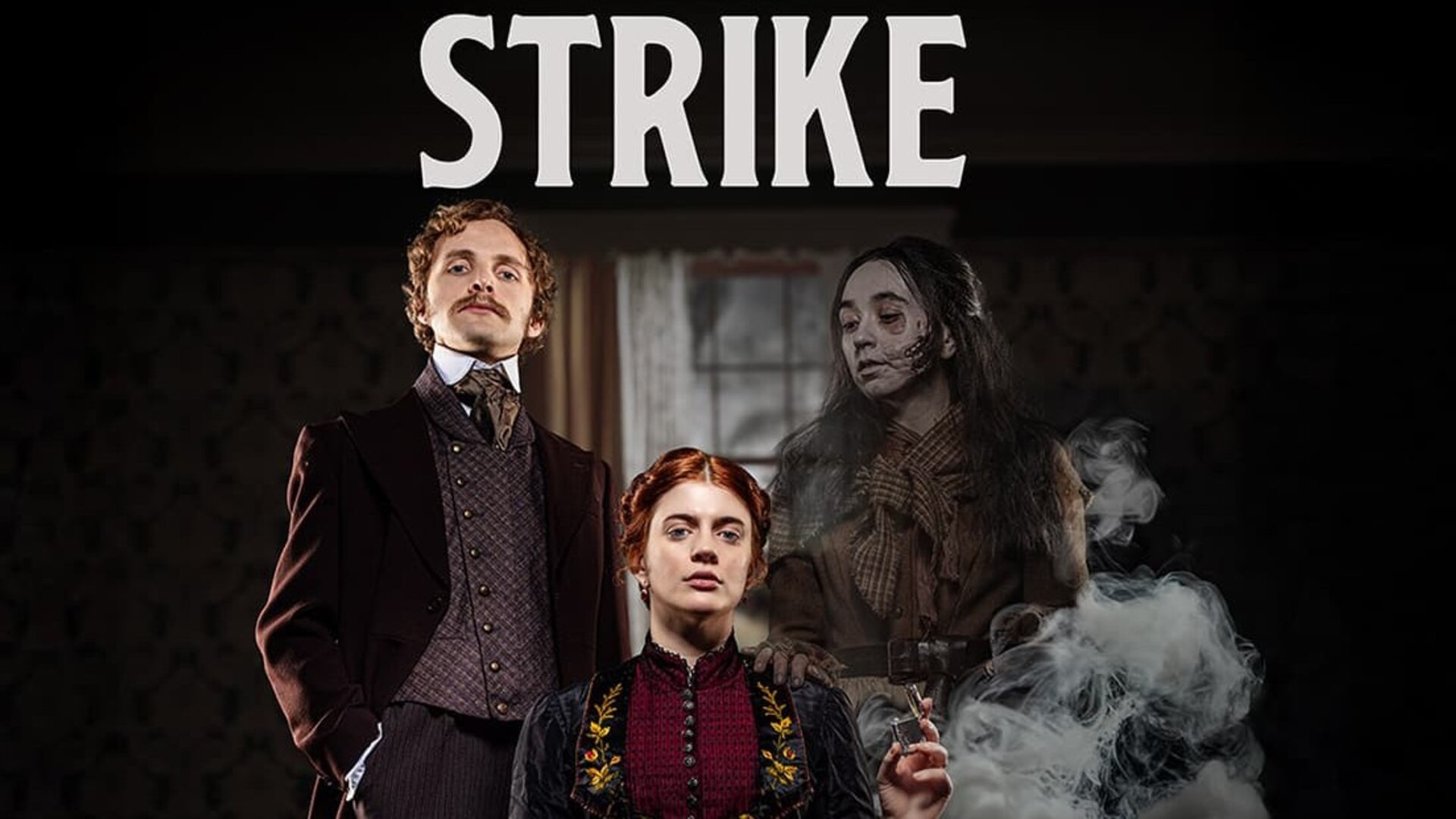
England 1888. A gothic tale of loneliness, control, exploitation and the spark of liberation.
The title has two meanings and the film uses both. In July 1888 some fourteen hundred women and girls walked out of the Bryant & May match factory in Bow, in the strike that followed Annie Besant's article on conditions there. What they were striking against, as much as the fines and the pay, was white phosphorus: the dust got into the jaw through a bad tooth and rotted the bone, a disease the workers called phossy jaw and the doctors called phosphorus necrosis. Britain did not ban white phosphorus in matches until 1910.
In 1888 England, Francine Worthing lives a secluded life after a devastating riding accident leaves her confined to a wheelchair. Her days are spent among books and memories, her world reduced to the walls of her bedroom and the watchful presence of her husband, Sebastian, a factory owner whose charm masks a more troubling hold over her.
When Sebastian presents Francine with a silver vesta case filled with specially made matches, the seemingly thoughtful gift becomes something far stranger.
That gift is the film's whole argument in one object. A vesta case was an ordinary thing for a wealthy household to own, and these matches are handpicked rather than pulled from the export batch, which is presented as tenderness and works as a leash. Every light Francine strikes is her husband's product, made by other women, brought into her room and put into her hand. She reads the newspapers he would rather she did not, and the newspapers are running the factory story.
What arrives when she strikes one is not a jump-scare. The film gives its ghost a name and an age and a cause of death, in the form a Victorian reader would actually have met her in, which is a line of type in the obituary column. Once she is named the haunting stops being frightening and becomes an accusation. The film ends on the question of which of the two people in the house she came for.
Evocative and haunting, Strike carries the spirit of Edgar Allan Poe and Shirley Jackson while embracing the cinematic sensibilities of Guillermo del Toro and Mike Flanagan. A gothic fable for modern audiences.
Twenty-eight minutes, written by Hendrik Harms, directed by Mark Patterson and produced by Amy Warren, with Tom Ward as executive producer.